June 30, 2006

Attention Livestock Owners and Food Eaters

Countryside & Small Stock Journal, July/August 2006

Mr and Mrs Consumer, NAIS will affect your life/eating habits. It's not just about the homesteader, small farmers, hobbyist, 4-H or FFA.

The other night the History Channel's show Modern Marvels did a show about the butchering industry from the way it used to be to modern sanitary methods. Truthfully, it scared the crap out of me.

The Butcher
aired on Thursday, June 29 at 12:00am ET.

In a carnivorous world, a butcher is a necessary link in the food chain, carving a carcass of unsavory flesh into mouthwatering cuts. We trace the grisly trade's evolution--from yesteryear's butcher-on-every-corner to today's industrial butcher working on a "disassembly" line. We tour the infamous remains of the Chicago Stockyards, where Upton Sinclair, Clarence Birdseye, and refrigeration changed butchering forever; witness high-speed butchering; and travel to a non-stop sausage factory. And if you're still squeamish, a USDA inspector offers the lowdown on HACCP--the country's new system of checks and balances on everything from quality grading to E. coli, Salmonella, and Mad Cow Disease. Finally, we visit the last bastion of old-school butchering--the rural custom butcher, who slaughters, eviscerates, skins, and cuts to his customer's wishes.


After watching this I understood more about how they have totally removed any natural benefits that could be found in meat if they left it alone. Modern butchery includes washing the carcasses down with a sanitizer (as opposed to the old way of letting the beef hang for 2 weeks and let those inate enzymes do their work), injecting meat with chemical salt solutions to make the meat more tender, wrapping the meat in a gas rich environment to "preserve" its color - bright red - no matter how old the meat is. Ick.

The Gaited Horse also has a new article against NAIS. Horse owners haven't felt that NAIS will have anything to do with them.

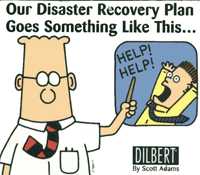
This cartoon pretty much sums up how the USDA,Inc. and the states Agriculture Agencies are handling NAIS.

We know that communication is a problem,
but the company is not going
to discuss it with the employees."


Have a wonderful 4th of July weekend. You might spend some time reflecting on why the Founding Fathers even bothered to make the US independant. I doubt, in all sincerity, that it was just so that some 230 years later our freedoms would be stripped because a few in power think we are so dumb that without direction from "on high" (being the goverment) we might drown on our own spit.

Hen....out.

June 26, 2006

Grants to States and Tribes from the USDA to counter "misinformation"

From Nonais.org

USDA Offers NoNAIS.org $10M Grant
News — walterj 3:13 pm

Well… not really. The USDA is offering a grant to states and tribes to pay for propaganda, er, I mean information, to counter the ‘misinformation’ about the USDA’s proposed National Animal Identification System (NAIS).

Funding Opportunity: USDA-GRANTS-051106-001
Posted Date: May 11, 2006
Closing Date for Applications: Jul 25, 2006
Archive Date: Aug 24, 2006
Category of Funding Activity: Agriculture
Expected Number of Awards: 111
Estimated Total Program Funding: $10,882,000
Eligible Applicants

* State governments
* Native American tribal governments (Federally recognized)

USDA initiated implementation of the NAIS in 2004. The Department’s first priority with the initial funding in FY2004 was to have the components of the national premises registration system in place in every State by July 2005. With this accomplished, the next step was to use FY2005 funds to increase the number of registered eligible premises in each State. As of April, 2006, over 245,000 premises have been registered nationwide, or approximately twelve percent of the estimated number that are eligible. Funding for FY2006 will be provided to State and Native American Tribal governments to support the continued implementation and maintenance of the national premises identification system and NAIS within their respective areas. *We would like to achieve a national target for premises registration of fifteen percent by July, 2006, twenty five percent by January, 2007, and thirty five percent by July, 2007.* Since the majority of premises will be registered in a voluntary system, it is critical that we provide all individuals, business, and organizations a correct and consistent message about how they will benefit from NAIS and their responsibility to participate. **Misinformation and adverse publicity has been somewhat detrimental to the adoption of NAIS in many areas of the country.** USDA is working with States, organizations, and other stakeholders to develop appropriate educational and outreach materials. Applications for cooperative agreement funding must include an aggressive plan for education and outreach, including effective use of existing outreach resources such as cooperative extension, state AVIC offices, and state industry organizations, to stakeholders at all levels within the state or tribe…

If you have difficulty accessing the full announcement electronically, please contact:
Eileen Berke, Phone 301-734-8330 APHIS, Agreements Services Center contact

It is nice to be appreciated. Unfortunately I don’t qualify since I am neither a federally recognized state or tribe so apparently the USDA is not going to be funding NoNAIS.org’s effort to get out the truth. Still, it is nice to know they noticed our efforts. Consider: the USDA is spending $10 million of our taxpayer dollars for propaganda to counter our efforts to spread the word about the horrors of NAIS. $10,882,000 should buy them lots of propaganda and Madison Avenue hype to spread their lies that NAIS is a wonderful thing.

Frankly though, that is a pretty bad investment to payback ration given that I have not yet spent $1,000 in my effort to counter the USDA and state agriculture department lies about NAIS. I doubt that every NoNAISer put together has come close to even 1/10th of 1% of ten million dollars to date in our fight against NAIS. That makes us over 1,000 times more effective than the USDA and means that as usual, government is terribly inefficient. Imagine the educational outreach to small farmers and homesteaders that we could do with $10,882,000 ÷ 112 = $97,160…

*By the way, noticed the target Premises ID levels which I italicized above. Previously the USDA has been rather tight about these numbers. So now we know what those goals are refering back to the USDA’s April 2006 NAIS document on page 3.

**Gee! When people find out the truth they don’t want NAIS… Wow!!! What a concept!

Also see these articles Govi Double-Speak and TAHC Brochure Lies.

Hat tip to Nicole.

June 24, 2006

Vermont Proposed Premises ID Rules

V3.2
SECTION 1204 Livestock Premises Registration
I. Definitions In this chapter:
(1) “Address” means one of the following:
a. A street address.
b. Township, range and section numbers, if the location has no street address.
c. Global positioning system (GPS) coordinates, if the location has no street address and no township, range and section numbers.
(2) “Livestock dealer” means a person who is required to be licensed 6 VSA §761.
(3) “Livestock dealer premises” means any real estate, owned or controlled by an animal dealer, at which the dealer keeps, exhibits or receives livestock or wild animals, or from which the animal dealer ships livestock or wild animals.
(4) “Livestock auction or sales ring” means any premises that are open to the public for the purpose of buying or selling livestock or wild animals, and that have facilities to keep, feed and water livestock or wild animals prior to sale.
(5) “Livestock packer” means a person who is required to be licensed under 6 VSA §761.
(6) “Livestock transporter” means a person who is required to be licensed 6 VSA §761.
(7) “Livestock transporter premises” means any real estate, owned or controlled by an animal trucker, at which the animal trucker collects or holds livestock for transportation.
(8) “Bovine” means cattle, American bison, or water buffalo of any age or sex.
(9) “Cervid” means any member of the family cervidae, except for white tail deer and moose (6VSA §1151(15)).
(10) “Clinic” means a place where livestock are brought or kept for purposes of health care or rehabilitation.
(11) “Confidential information” means information that the agency is required, under 6VSA §61, and this chapter, to keep confidential.
(12) “Contiguous” means adjacent, or separated only by a transportation corridor, stream or like feature.
(13) “Contract agent” means a person who acts on behalf of the agency, pursuant to a written contract with the agency.
(14) “Dairy farm” means a dairy farm as defined 6 VSA §2672 (3).
V3.2
(15) “Cervid farm” means real estate on which a person, who is required to register under 6 VSA §1153(c).
(16) “Agency” means the Vermont agency of agriculture, food and markets
(17) “Description” of a location means an address or other information that identifies that location.
(18) “Farm-raised deer” means a captive cervid.
(19) “Individual” means a human being.
(20) “Keep livestock” means to own, feed, house, confine or care for livestock, or to exercise legal or physical control over livestock. “Keep livestock” does not include the temporary quarantine or confinement of livestock by the agency or by the USDA.
(21) “Livestock” means cattle, sheep, goats, equine, deer, American bison, swine, poultry, pheasant, Chukar/partridge, Coturnix quail, camelids, and ratites. This term shall include cultured trout. It will exclude psittacine birds and ferrets (6 VSA §1151).
(22) “Livestock fair” means any public or privately operated facility where animals are confined for the purpose of display and/or sale or for viewing (20 VSA §3091).
(23) “Location” means a parcel of real estate in this state, or a group of 2 or more contiguous parcels of real estate in this state, on which livestock are kept.
(24) “Milk handler” has the meaning given in 6 VSA §2721.
(25) “Person” means an individual, corporation, partnership, cooperative, Limited Liability Company (LLC), trust, or other legal entity.
(26) “Poultry” means domesticated fowl commonly used for human food, including domesticated chickens, turkeys, geese, ducks, guinea fowl and squab, captive game birds and ratites.
(27) “Premises” means one or more locations that a person registers under a single premises code.
(28) “Premises code” “premises number” means a 7 digit, alphanumeric number issued through the Agency’s premises registration system.
(29) “Primary location” means a premises location to which a premises code is assigned.
(30) “Ratite” means a member of the group of flightless birds that includes the ostrich, emu, cassowary, kiwi and rhea.
(31) “Register” means to apply for and obtain from the agency a premises registration certificate.
(32) “Registered location” means a primary or secondary location that is covered by a current premises registration certificate.
(33) “Secondary location” means a location that shares or commingles animals with the primary location and is registered with the primary location under a single premises code.
(34) “Slaughter establishment” means a place at which livestock are received for slaughter.
II. LIVESTOCK PREMISES; REGISTRATION REQUIRED
(1) GENERAL
A person who keeps livestock at a location in this state needs to register that premises with the Vermont Agency of Agriculture, Food and Market (VAAFM) premises registration system as prescribed under this section. There is no fee to register. A registration expires on December 31 of each biennium, except as otherwise provided in subsection (2)(c).
(2) WHO MUST REGISTER
a. If two or more persons are involved in keeping livestock at the same location, one of those persons shall register that location. A person is not required to register a location that is currently registered by another person. A premises registration by one person does not prevent other persons from keeping livestock on the registered premises.
b. A person may not register a premises that is currently registered by another person. The agency may transfer a current registration from the current registrant to another person if the agency finds that the other person is required to register the premises under part (c), is more directly engaged in operating the premises, or can provide more definitive knowledge of livestock movements to and from the premises. The agency shall notify the current registrant and give the current registrant a chance to comment before transferring a registration to another person.
c. A person who operates any of the following shall register the locations at which that person keeps livestock or receives livestock carcasses as part of that operation:
i. A dairy farm that is required to be inspected under 6 VSA Chapter 151. The farmer may register the dairy farm premises as part of the milk producer’s initial startup inspection or subsequent milk inspections.
ii. A captive deer farm that is required to be registered under 6 VSA §1153. The operator may register the deer farm premises as part of the operator’s annual inventory and inspection.
iii. A livestock market, auction, or fair that is required to be licensed or registered under 6 VSA §762 and 6 VSA §3902. The operator may register the premises as part of the operator’s annual license/registration application.
iv. Livestock dealer premises that is required to be licensed under 6 VSA §762. The animal dealer may register the premises as part of the animal dealer’s annual license application.
V3.2
v. Animal transporter premises operated by an animal transporter who is required to be licensed in 6 VSA §762. The animal transporter may register the premises as part of the animal transporter’s annual license application.
vi. A slaughter establishment. The operator may register the slaughter establishment premises as part of the operator’s annual license application under 6 VSA §3306.
vii. An equine quarantine station for which a permit is required. The operator may register the equine quarantine station premises as part of the operator’s annual permit application under.
viii. A rendering establishment, animal food processing establishment or grease processing establishment that receives livestock carcasses and is required to be licensed. The operator shall include, in a registration, any transfer stations or other locations at which the operator collects livestock carcasses for transfer to a rendering or processing location.
ix. Veterinary clinic that receives or houses livestock as part of their care or treatment.
(3) HOW TO REGISTER
Except as provided in subsection (2)(c), a person shall register in one of the following ways:
a. By applying on-line at http://www.vermontagriculture.com
b. By filing a hard-copy application with the agency on a form provided by the agency.
(4) EFFECTIVE DATE
Individuals that keep livestock for sale to the public (or product from livestock) will have 6 months to comply with this rule. All others will have one year from the effective date of this rule to comply.
(5) INFORMATION REQUIRED
A registration application under subsection (3) shall include all of the following information:
a. The registrant’s legal name and any trade names under which the registrant keeps livestock in this state.
b. The registrant’s mailing address.
c. The registrant’s telephone number.
d. The address of the primary premises location, and any secondary premises locations. 4
V3.2
e. The name and telephone number of at least one individual who has knowledge of livestock and livestock carcass movements to and from every location included in the premises.
f. The types of livestock operations conducted on the premises. The registrant shall designate one or more of the following:
i. Farm or production unit.
ii. Clinic.
iii. Livestock exhibition.
iv. Laboratory.
v. Livestock market or collection point.
vi. Port of entry.
vii. Quarantine facility.
viii. Rendering.
ix. Slaughter plant.
x. Tagging site.
xi. Non-producer participant.
g. The types of livestock kept on the premises. The registrant shall designate one or more of the following:
i. Aquaculture.
ii. Cattle.
iii. Bison.
iv. Swine.
v. Sheep.
vi. Goats.
vii. Horses or other equine animals. 5
V3.2
viii. Farm-raised deer.
ix. Poultry.
x. Ostriches, emus or other ratites.
xi. Llamas, alpacas or other camelids.
(6) AGENCY ACTION ON REGISTRATION APPLICATION
a. Except as provided in part (d), the agency shall grant or deny a registration application under subsection (3) within 30 days after the agency receives a complete registration application.
b. The agency may deny a registration application if the application is incorrect or incomplete, or if the primary location identified in the application is currently registered. The agency shall state the reason for the denial.
c. If the agency denies an application because the primary location identified in the application is already registered, the agency shall disclose to the applicant the premises code assigned to that registered primary location after making sure there has not been a change in ownership or business status. The denial does not prevent the applicant from keeping livestock at the registered primary location or from registering other locations.
d. If a person submits a registration application as part of that person’s application for another license, permit or registration identified in subsection (2)(c), the agency shall grant or deny the registration application within the time period prescribed for agency action on the other license, permit or registration application. The denial, suspension or revocation of another license, permit or registration does not affect a premises registration under this section.
(7) REGISTRATION CERTIFICATE
a. Whenever the agency grants a registration application under subsection (3), the agency shall immediately issue a registration certificate to the registrant. The agency shall issue the registration certificate in hard copy or printable electronic form, depending on the method of registration.
b. A registration certificate under part (a) shall include a premises code assigned under subsection (7).
c. A registration certificate covers the primary location and all secondary locations identified in the approved registration application, regardless of whether the certificate includes descriptions of all of those locations.
d. If a person submits a premises registration application as part of that person’s application for
6
V3.2
another license, permit or registration identified in subsection (2) (c), the agency shall issue the premises registration certificate with or as part of that other license, permit or registration.
(8) PREMISES CODE
Whenever the agency grants a registration application under subsection (3), the agency shall assign a unique code to the primary location identified in that application. A premises code may not be transferred to other premises.
(9) ENFORCEMENT
The secretary may take the following action to ensure compliance with the premises registration provisions of Section II (2) of these rules:
a. A person who is required but who fails to register a livestock location under these rules shall be sent a written letter of warning which shall include a brief description of the alleged violation of these rules and include a request that the premises be registered within 30 days of the date of the letter;
b. If, after the expiration of the 30 day period described above, a person who is required but who fails to register a livestock location may receive a cease and desist order from the secretary requiring the person to register the livestock premises;
c. Violations of a cease and desist order issued under this section may be enforced through an proposed administrative penalty not to exceed $1,000.00 pursuant to 6 V.S.A. §15(a);
d. Administrative penalties issued under this section shall comply with the provisions regarding notice and an opportunity for a hearing as set forth in 6 V.S.A. §16.
III. CONFIDENTIAL INFORMATION.
(1) GENERAL
Except as provided in subsections (2) to (4), premises registration information received by the agency or its contract agent under this rule is confidential and may not be disclosed to any other person or agency.
(2) INFORMATION REQUIRED BY OTHER LAWS
Subsection (1) does not apply to information that a person is required to provide to the agency under other law. This subsection does not authorize disclosure of information that is protected from disclosure under other law.
(3) AUTHORIZED DISCLOSURE
After approval by the Secretary of Agriculture or state animal health official, the agency may disclose, to any of the following, information that a registrant provides under this rule: 7
V3.2
a. A person to whom the registrant authorizes disclosure.
b. The animal and plant health inspection service of the United States department of agriculture, through a signed memorandum of understanding, not to disclose the information except in situations in which the agency is authorized to disclose the information.
c. The agency’s contract agent, subject to this section.
d. To another person or agency, or to the public, if the agency believes that the release is necessary to prevent or control disease, to enforce laws under its jurisdiction, or to protect public health, safety, or welfare. The agency may disclose information under this paragraph subject to any confidentiality requirements that the agency considers necessary under the circumstances.
(4) AGGREGATE INFORMATION
a. The agency may create aggregate information, such as maps and statistics, from registration information obtained under this rule. Except as provided in par. (b), the agency may disclose that aggregate information to another person or agency, or to the public.
b. The agency may not disclose aggregate information under paragraph (a) that does any of the following, unless that information qualifies for disclosure under subsections (2) or (3).
i. Discloses the street address, section number, global positioning system coordinates of any premises, or the identity of any registrant.
ii. Makes it possible to deduce with certainty the street address, section number, global positioning system coordinates of any premises, or the identity of any registrant.
(5) DISCLOSURE BY CONTRACT AGENT
a. The VAAFM may authorize a contract agent to disclose, on behalf of the agency, information that the agency is authorized to disclose under this section, except that the agency may not authorize its contract agent to release aggregate information.
IV. CONTRACT AGENT
(1) GENERAL
a. The agency may contract with an agent to process registrations, manage registration information, and perform other functions on behalf of the agency under this chapter. The contract agent shall comply with the provisions of these rules.
V. RECEIVING LIVESTOCK FROM UNREGISTERED LOCATIONS
(1) PROHIBITION 8
V3.2
Except as provided in subsection (2), no person may receive, for purposes of sale, exhibition or slaughter, livestock from a location that is required to be registered under this rule or an equivalent law in another state, unless that location is registered according to this chapter or an equivalent law in the other state.
(2) APPLICATION CONTINGENT UPON RECIPROCITY
Subsection (1) does not apply to any person, or to any receipt of livestock for a purpose identified in subsection (1), unless the United States Department of Agriculture or all of the states surrounding Vermont prohibit persons in those surrounding states from receiving livestock for that purpose from unregistered locations in this state that are required to be registered under this rule.
9

June 18, 2006

Deeper understanding of the evolution of NAIS

THE NATIONAL ANIMAL IDENTIFICATION SYSTEM

By Lynn Stuter

June 6, 2006

NewsWithViews.com

Haven’t heard of the National Animal Identification System (NAIS)? Don’t feel bad, you join millions of Americans, including the majority of those who will be forced to identify their animals with radio frequency identification (RFID) technology in January 2009.

Believe it or not, the whole concept of animal identification with RFID technology didn’t begin with the Patriot Act back in 2001, PL 107-56. A document from the National Institute for Animal Agriculture (NIAA), “NAIS Facts and Myths”, dated March 2006, states, “Although discussions on animal ID have taken place for many years and started well before 2002 …” Another document entitled “Summary and Future Action” published by NIAA, carries the remarks of individuals gathered at a symposium on animal identification in 1994. It is obvious from remarks made in this document that the participants were drawn from an international field:

“Let me just say to all of you, how much I appreciate your attendance … and for many of our participants, you have had to come from abroad …”

The document addresses a national animal identification system. Other statements in the document make reference to ISO — International Standards Organization — which has/is establishing standards of global uniformity, consistent with the needs of global government and global systems.

Participants in this symposium included private enterprise, the United States Department of Agriculture (USDA), livestock associations, foreign organizations, and institutes focusing on animal health and science. The focus of the symposium was a voluntary uniform system of animal identification.

As with so many other things, the events of September 11, 2001 provided opportunity to reframe the debate around issues of security. From Public Law, 107-56, otherwise known as the Patriot Act of 2001,

Section 1013(9): “Improvements must be made in assuring the safety of the food supply,”

Section 1016(d)(2)(B): “Acquisition from State and local governments and the private sector of data necessary to create and maintain models of such systems and of critical infrastructures generally.”

Section 1016(e): “CRITICAL INFRASTRUCTURE DEFINED. ­In this section, the term ‘‘critical infrastructure’’ means systems and assets, whether physical or virtual, so vital to the United States that the incapacity or destruction of such systems and assets would have a debilitating impact on security, national economic security, national public health or safety, or any combination of those matters.”

Portions of two laws, passed in 2002 - Public Law 107-171 and 107-188 - were codified into United States Code as 7 USC, Sections 8301 through 8321, deemed the Animal Health Protection Act. In this section of code, 7 USC, Section 8320, provides the authority for NAIS. However, there is no authority, beyond the authority given the Secretary of Agriculture and/or Secretary of Homeland Security to establish rules, for the dates that have been decided for implementation, January 2009 being the date stated when ALL meat producers MUST be registered, have premises identifications numbers (PIN) and animal identification numbers (AIN).

In documents published by the USDA and private organizations advocating NAIS, three issues are addressed as impetus for NAIS:

1. tracing and eradicating communicable and contagious diseases among livestock,
2. food safety, and
3. national security.

Most prevalent among diseases pointed to in the above noted published documents is Mad Cow Disease (BSE) and Foot and Mouth Disease (FMD). Mad Cow Disease is not a communicable disease among cattle; it is an acquired disease through contaminated feed; cows can pass it to their calves if the calves are born after symptoms of the disease are onset. A cow fed contaminated feed may not show signs for years. In that period of time, the cow may have been sold many times. A group of cattle, fed the same feed, may be scattered far and wide before symptoms of the disease become apparent in any one animal in the group. The claim is made that NAIS will provide a system of 48 hour trace back to other animals at risk.

In the past three years, there have been three incidents in which cattle have tested positive for BSE in the United States — one in Washington State, one in Alabama, and one in Texas. The epidemiology report on the cow testing positive in Texas more than adequately makes the case for why NAIS will not be effective in tracing BSE in the interests of food safety. Other cattle, deemed at risk, either because they were fed the same feed as the BSE positive cow or were offspring of the BSE cow within two years of the BSE cow showing symptoms of the disease, were largely found to have already been slaughtered. No database, focused on a 48 hour trace back on diseases such as BSE, is going to change the reality that other at-risk cattle have already been slaughtered and consumed by the public.

It has been years since an outbreak of Foot-and-Mouth disease has occurred in the United States. It is a disease that can be vaccinated for ­— the easiest tool to prevention if the disease is known to be endemic to an area. Current measures taken have obviously been quite effective in controlling the disease in the United States for some time. Other known diseases are being similarly controlled.

It becomes apparent that no huge mandatory national database, in the hands of the federal government, housing information on private citizens and livestock on the premises of those private citizens, is it going to change the reality that animals exposed to communicable or contagious diseases may have been slaughtered during the incubation period with the meat already having reached the consumer. Unless the Animal Identification Number (AIN) follows the meat to consumption, there is no way that NAIS is going to make the meat industry “safe” for the consumer. It is apparent that this fact is known to those advocating NAIS as documents published state that if the AIN number follows the meat through slaughter to the consumer, liability becomes an issue. Obviously, contrary to what has been stated in government documents concerning NAIS, protecting consumers from meat-born disease is not the focus or concern of NAIS, is not at issue with NAIS.

On the level of national security, considering diseases indigenous to livestock, incubation periods and likelihood of discovery, is it feasible to believe that it would be cost effective and results effective for terrorists to introduce pathogens to livestock in the hopes of killing a large number of people when terrorists focus on more bang for the buck? While a document of the National Food Animal Identification Task Force, titled “Safeguarding Animal Agriculture, National Identification Work Plan”, 2002, concludes that an animal identification crisis looms and speaks directly of threats to biosecurity, again the AIN will not follow the meat through the slaughter process to the consumer. Any crisis that might come from purposely introduced pathogens to cattle is not going to be diminished by the National Animal Identification System.

The National Animal Identification System will consist of three components:

1. Premises Identification (PIN)
2. Animal Identification (AIN)
3. Animal Tracking

Each premises where livestock are kept will be required to have a premises identification number (PIN). Registration will require premises GPS coordinates. Each animal on that premises will be required to have an animal identification number (AIN) except where animals are moved by group in which case they will be assigned a group identification number (GIN). The RFID implanted AIN number will be either attached to the animal by means such as an ear tag (cattle) or implanted sub-dermal in the animal, either of which must be readable by hand-held or stationary ISO certified technology. Using the PIN, AIN and GIN, animals will be tracked from birth to slaughter.

For purposes of identifying possible exposure to communicable or contagious disease, any time an animal leaves the GPS coordinates correlating to its AIN, the federal government, by regulation, will have to be notified. “Any time” means just that.

Problems abound with the National Animal Identification System. One of the more apparent has already been identified — the failure of the AIN to follow the animal through slaughter to the consumer negating the government claim of a safe food supply.

Another has to do with technology and RFID tags. The internet has been rampant with articles concerning the ease with which RFID technology can be hacked. Imagine the fun a hacker could have in a flock of sheep or a herd of cattle changing RFID implanted AINs. While laws make it a crime to alter the AIN, the likelihood of hacked RFID implanted AINs being found readily is remote. It could be months before reason might present itself to scan the RFID implanted AIN number on any given animal. And, if the hacker really wanted to created chaos and frustration, he would visit areas resident to large ranches with a large number of animals present and he would change some AINs, just enough to make it impossible to ascertain which RFID implanted AINs have been hacked without scanning the entire animal populace. Ever been on a large cattle roundup where the animals are wilder than a coot? Imagine running 1500 wild-eyed, nervous, cattle by a scanner one at a time to check AINs for hacking. Once scanned, in a herd of 1500 animals, how can the “chain” of correlation between cow and offspring be reconnected when the AIN has been hacked? Imagine the fun a hacker could have on a feedlot housing thousands of cattle, hogs, or sheep where GINs may identify AINs from multiple sources. Imagine loading commercial haulers with cattle consigned for sale, hauling those cattle hundreds of miles to a sale yard and discovering the AINs on some of the animals do not correlate with the PIN, having been changed by hackers.

In sum, there is no way the RFID technology can be made secure. As such, if hacked, the cost will be prohibitive, not to the government implementing this mandatory system, not to the various livestock associations supporting NAIS, but to the owner of that animal.

In the same vein, government documents indicate that AIN numbers will be assigned by lot, so many numbers per given location. How those lot numbers will be divided up across the United States has not been made clear. However, it stands to reason that however lot numbers are assigned, the capability for issuing identical AIN numbers exists unless those numbers come from a centralized databank of available numbers, one with the capability to keep up with the rapid demand for numbers. There is also the capability for data entry errors. The federal government has never been known to be terribly efficient or accurate in that department. And there is the capability for computer glitches and viruses resulting in data loss.

The cost of the technology, the implants, hacked AINs, duplicate AINs, data errors, data loss, computer systems and personnel, all add up to costing the producer more money. The likelihood of recouping that cost at the sale yard is negligible if markets are competitive. If they are not, the cost to the consumer will be prohibitive. The effect, while purported to increase the value of meat, will not increase the value enough to offset the cost, especially as the AIN will not follow the meat through slaughter to the consumer. The ultimate effect will be to put small producers out of business and make meat prices prohibitive to the consumer.

Now we turn to the USDA Animal and Plant Health Inspection Service (APHIS). APHIS has been given oversight of NAIS. The APHIS Strategic Plan, 2003-2008, states as one of its three goals “Safeguard the health of animals, plants, and ecosystems in the United States.” This same document also states, “What is new (in this document), however, is that APHIS is being more specific about approaching its protection activities as a system of interdependent strategies.” (emphasis in original)

This document makes it very apparent that NAIS is about transformation of the animal and plant production industry to coalesce systems governance in which systems are established and maintained for no other reason than the sustainable global environment.

Across the United States, state legislatures have rushed to pass laws in pursuit of federal seed money via discretionary grants which will cede to the federal government state control over animal production.

Livestock associations have climbed on a moving train purposely destined for their destruction. Dissension is growing. Articles showing up in livestock publications and published in newspapers across the U.S. in late 2005 indicate dissension with what has now become a federally mandated and housed database of information of individuals inside the United States. While measures to insure confidentiality are assured, there is no such thing as security in technology. Hackers have accessed supposedly secure systems all across the United States, including the Pentagon. Beyond this, there is no reason, beyond oppression, that the federal government should have this information.

Right now, the 2009 mandatory date for have PINs, AINs and GINs is in regulation only. Legislation has been introduced making it law.

Where does this stop? Can we reasonably expect it to stop with animals or will the mass implantation of RFID technology in humans for the purpose of identification be next? We are already seeing signs of it. It is naive to believe that a world system of nation states, bent on data-basing every aspect of life on earth for the purposes of controlling every system on earth to keep all systems in balance in the pursuit of a sustainable global environment, will not target the people, euphemistically referred to as “human capital”, devalued to just another system needing to be managed and controlled.

© 2006 Lynn M. Stuter - All Rights Reserved

Sign Up For Free E-Mail Alerts

Mother and wife, Stuter has spent the past ten years researching systems theory with a particular emphasis on education. She home schooled two daughters, now grown and on their own. She has worked with legislators, both state and federal, on issues pertaining to systems governance and education reform. She networks nationwide with other researchers and citizens concerned with the transformation of our nation. She has traveled the United States and lived overseas.

Web site: www.learn-usa.com

E-Mail: lmstuter@learn-usa.com
June 16, 2006

The Horse magazine

The Horse magazine is requesting Proposals Sought for Equine Identification Projects. That got me fired up, so I wrote to Dr. Morehead, American Association of Equine Practitioners.

Dear Dr. Morehead,

What is The Horse thinking? Horse tagging won't stop disease. All NAIS is going to do it make criminals out of horse owning people and others who own animals for their own use but don't want to be subjected to government search and unwarranted seizure. My chickens and my mare aren't a vector for anything. Don't you know that NAIS was designed by USDA/APHIS/NIAA to insure marketing opportunities with Japan? And that is falling apart. Japan doesn't want our beef.

My beef is with The Horse and you and others who are so willing to give up liberty in exchange for a false sense of security. Shame on you, Sir, shame on you. You must not be for freedom. If you are not for freedom then you are for tyranny. I don't think that George Washington and his men with bloody feet marched through Valley Forge just so that our livestock could be tracked and called a part of the National Herd.

God save us.


People! People! You have got to wake up! Sound the alarm. After NAIS becomes the new normal, it's going to be all of us and our kids. Mark my words. Do you want your children to inherit a world where all personal property is tracked (which means there will be no personal property)? Do you want your children and your grandchildren to forced to wear a chip? I know, it sounds so goofy, but it is the reality of NAIS.

Bwaak.

June 2, 2006

USDA/APHIS: Past performamce is a predicter for future actions

The following story is from a Lone Star state small rancher. Read it and realize this type of action is not unusual. Imagine how much worse it will be if NAIS comes into force.

We already had the USDA/APHIS?Texas Department of Agriculture come onto our property once. They were trying to find a fever tick cow, insisted we had one, chemically dipped (we are organic) all our cows then said they had the wrong cows. A major producer had pointed them in our direction and they didn't check ear tags until all was done! They schloshed toxic chemicals all over, injured three cows (one got caught between the chute and dip tank hanging upside down and we had to get our tractor to pull it apart), marked all our cattle with yellow quarantine paint. They just picked up and left us in a mess, no apology, said they weren't responsible for injured cattle. It all happened so fast and they represented we didn't have a choice in the matter.

A new link of an activist fighting the good fight against NAIS:
http://www.rddavis.org/equitation/freedom-vs-id_w.html

Click your way also to libertyark.net and sign up as a supporter. This is going to be very important once we are ready to go to Congress to say No NAIS!

Hen